Introduction
Themed environment design has entered a transitional era defined by advancing fabrication technologies, heightened visitor expectations, and the growing need for integrated emotional narratives. Parks, entertainment districts, and experiential venues increasingly rely on precise spatial storytelling to differentiate themselves. The objective is no longer limited to visual immersion. It now encompasses multisensory orchestration, environmental logic, and operational adaptability. The shift is structural and will continue to reshape the industry.
Toward Hyper-Integrated Narrative Systems
1.1 Spatial Storytelling With Functional Purpose
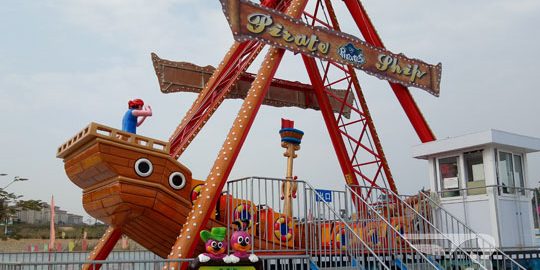
Narrative-driven spatial design now functions as a core operational framework rather than a decorative accessory. Circulation paths, structural silhouettes, and queue geometries all serve as narrative devices that guide visitor perception. Designers embed story cues into architectural massing and scenic layering, ensuring each area behaves as a coherent narrative node.
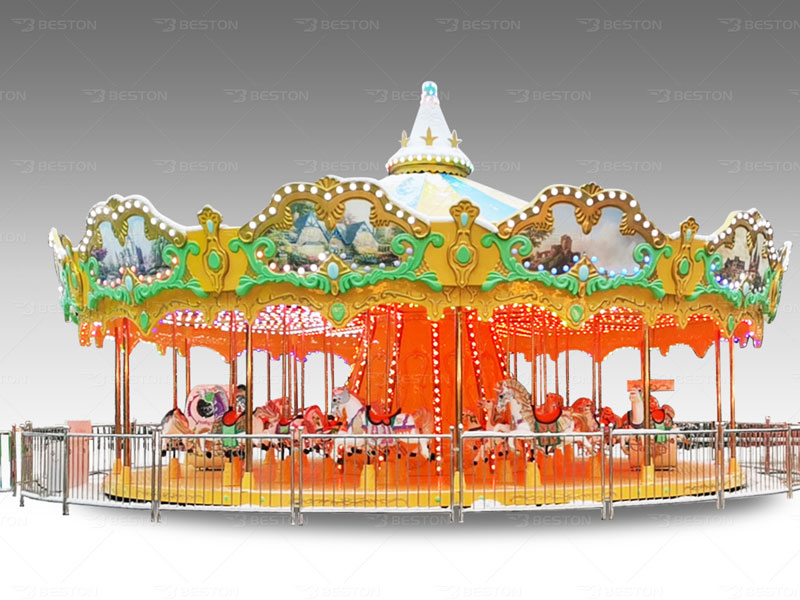
Even compact attractions—whether a family coaster station, a small plaza hosting a carousel for sale, or an entry gateway—are now treated as integral parts of the overarching story world. Short sentences clarify intent. Longer sentences provide structural context and support the narrative continuum.
1.2 Dynamic Narrative Modulation
Environments increasingly incorporate adaptive scenic elements such as programmable lighting arrays, responsive projection surfaces, and kinetic façades. These flexible systems allow the thematic tone of an area to shift throughout the day, supporting seasonal overlays, event-driven atmospheres, and micro-story moments. The objective is environmental elasticity—spaces that evolve rather than remain visually static.
Material Innovation and Fabrication Evolution
2.1 High-Fidelity Composite Systems
The era of single-material construction is fading. Composite skins, engineered polymers, and lightweight structural frames enable complex geometries previously unattainable through traditional carving or molding. These materials exhibit durability, modularity, and favorable maintenance characteristics, allowing operators to refresh zones without extensive downtime.
2.2 Advanced Texturing and Surface Realism
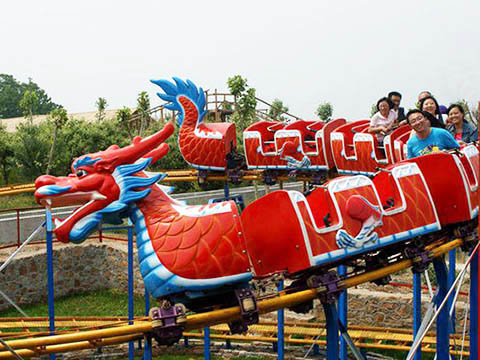
Laser-engraved panels, multi-layered coating systems, and micro-relief textures enhance tactile authenticity. This precision improves environmental believability—even in small attractions such as a family coaster station or the perimeter plaza for a carousel for sale. Fine-grain design choices elevate perceived value.
Immersive Technology as Core Infrastructure
3.1 Seamless Digital-Physical Fusion
Augmented media is transitioning from an accessory to a design foundation. Projection mapping, embedded AR markers, and ambient screens are integrated into the architectural envelope itself. The result is a hybrid ecosystem where practical sets and digital layers coexist, creating volumetric narratives without overwhelming guests.
3.2 Sensorial Synchronization
Scent diffusers, temperature modulation, directional audio, and air-jet systems provide multisensory calibration. Harmonizing these elements with visual cues produces psychological depth. When a ferris wheel for sale is framed within a themed zone, synchronized environmental effects can elevate what would normally be a simple vertical attraction into a more compelling landmark.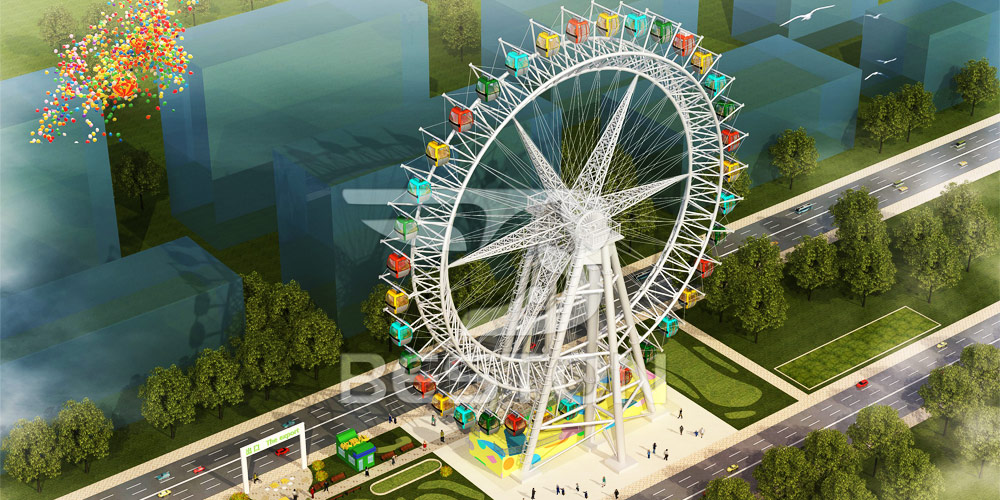
Modular and Scalable Design Frameworks
4.1 Prefabricated Scenic Modules
To meet condensed project timelines and rising labor costs, themed design is adopting modular construction strategies. Scenic units—columns, façades, rockwork blocks—are manufactured off-site and assembled in situ. This approach improves precision and lowers logistical burdens, especially for smaller parks that collaborate with amusement equipment suppliers under tight development cycles.
4.2 Incremental Expansion Models
Themed zones are increasingly designed with pre-planned “expansion joints.” These allow operators to introduce new experiences, seasonal overlays, or micro-attractions without disrupting existing layouts. Modularity preserves thematic harmony while enabling long-term growth.
Experiential Zoning and Crowd Ecology
5.1 Multi-Layered Sightline Management
Sightline choreography is becoming more intricate. Designers now craft tiered visual frames—foreground detail, mid-ground structures, distant icons—to form a cohesive scenic hierarchy. This avoids thematic leakage between zones and ensures controlled visual immersion.
5.2 Adaptive Capacity Design
Guest circulation is engineered with variable-density pathways, queue spill zones, and decompression pockets. These spatial configurations reduce congestion and enhance comfort. Even classic attractions, from a family coaster to a ferris wheel for sale, benefit from supportive environmental geometry that keeps pedestrian flow fluid.
The Rise of Environmental Story Engines
6.1 Kinetic Micro-Features
Small-scale motion, such as rotating lanterns, fluttering banners, or mechanized props, adds kinetic energy to static environments. These elements enrich visual rhythm. Their subtlety allows for constant engagement without sensory overload.
6.2 Environmental Gamification
Interactive triggers—touch panels, proximity sensors, gesture-based mechanisms—enable narrative participation. A visitor’s presence influences the environment, strengthening emotional resonance. Gamified pathways turn passive sightseeing into active exploration.
Localized Cultural Integration
7.1 Contextual Authenticity
Themed design increasingly draws from regional heritage, material palettes, and micro-cultural narratives. Authenticity is achieved not through literal replication but through abstracted motifs, localized textures, and interpretive storytelling. This ensures distinctiveness in a globalized industry.
7.2 Community Collaboration Channels
Partnerships with local artisans and performers add cultural validity. Handcrafted elements, folk-inspired patterns, and locally sourced materials establish a grounded sense of place. They also reduce reliance on generic scenic packages often offered by bulk amusement equipment suppliers.
Environmental Sustainability and Responsible Design
8.1 Energy-Efficient Scenic Systems
LED uplighting, low-power projection arrays, and zoned control networks reduce the environmental footprint. Sustainability is becoming a core design determinant rather than an auxiliary goal.
8.2 Durable Low-Maintenance Surfaces
High-resilience coatings, UV-stabilized polymers, and anti-corrosion treatments extend the lifecycle of scenic assets. This is essential for attractions such as a carousel for sale that operate in exposed environments with steady mechanical vibration.
Human-Centered Design and Psychological Intention
9.1 Emotional Arc Structuring
Themed environments increasingly mirror cinematic pacing. Entry thresholds, transition zones, and reveal moments are calibrated to guide guests through an emotional arc. This structural approach generates narrative coherence that users may not consciously perceive but intuitively feel.
9.2 Micro-Comfort Engineering
Seating alcoves, shaded rest pockets, acoustic dampening zones, and ergonomic landscaping support comfort during high-traffic seasons. Design that respects human needs increases dwell time and visitor satisfaction.
The Convergence of Retail, Dining, and Themed Architecture
10.1 Integrated Commercial Storytelling
Retail façades, dining venues, and merchandise layouts are now designed as narrative extensions. Commercial zones become diegetic rather than peripheral, blending thematic continuity with revenue generation.
10.2 Experiential Commerce
Shops and food spaces adopt interactive displays, theatrical staging, and sensory layering to transform routine transactions into immersive moments. Themed design and economic function become symbiotic.
Conclusion
The future of themed environment design is defined by integration—technological, narrative, material, and operational. It demands precision. It requires adaptability. And it is increasingly shaped by collaborative networks ranging from digital artists to amusement equipment suppliers.
Whether framing a family coaster, refreshing the forecourt of a ferris wheel for sale, or installing a carousel for sale within a compact plaza, the principles remain the same: environments must be coherent, dynamic, and deeply intentional. Themed design will continue to evolve toward richer storytelling, higher material fidelity, and more responsive guest experiences, charting a path that reshapes the entire experiential landscape.